Mapping handheld device interfaces with promotional timing to reveal strategy shifts in poker sessions alongside real-time sports selections and built-in safety checkpoints
Jakob Butler · Nov 12, 2026
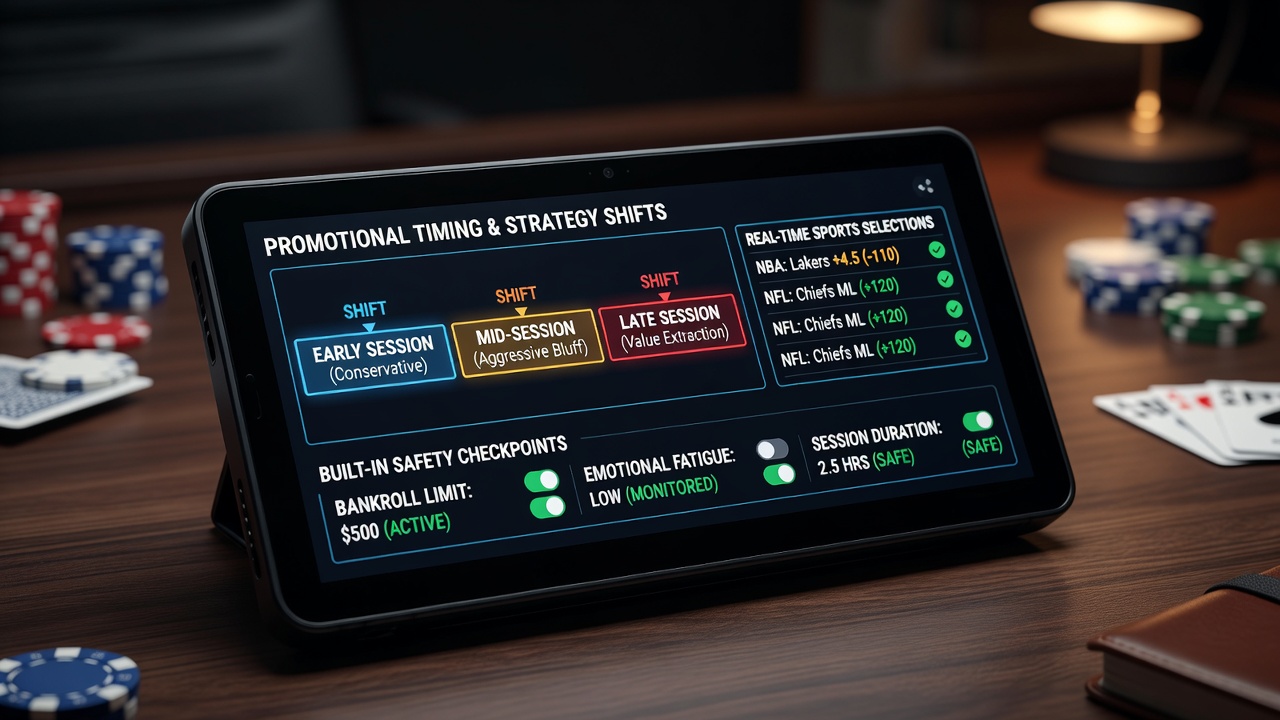
Mapping handheld device interfaces with promotional timing to reveal strategy shifts in poker sessions alongside real-time sports selections and built-in safety checkpoints
Handheld device interfaces in gaming applications have evolved to track user interactions through layered data points that capture both poker gameplay patterns and concurrent sports selections. Developers integrate timing logs for promotional displays directly into the session architecture, allowing observers to identify when players adjust their betting frequencies or hand ranges in response to timed offers. These systems record each prompt appearance alongside real-time odds feeds from athletic events, creating synchronized datasets that highlight correlations between interface elements and decision sequences.
Interface Mapping Methods in Mobile Environments
Analysts employ coordinate-based logging and event-stream analysis to chart every tap, swipe, and menu expansion on handheld screens during poker rounds. The process records pixel-level positions of buttons for fold, raise, and call actions while simultaneously monitoring when promotional overlays appear in the same visual field. Data streams from these mappings show how players shift from conservative pre-flop strategies to more aggressive post-flop plays once certain timed incentives surface on the display. Integration with live sports selections occurs through shared API layers that update basketball or football markets without disrupting the poker window, and the combined feed gets timestamped at sub-second intervals for later review.
Researchers at institutions such as the University of Nevada, Reno have documented similar mapping protocols in controlled lab settings, where test users navigate hybrid poker-sports applications while biometric sensors track response times. The resulting heatmaps reveal clusters of activity around promotional zones that coincide with measurable changes in poker aggression metrics, including increased three-bet percentages and larger continuation bet sizes.
Promotional Timing and Observable Strategy Adjustments
Promotional timing functions as a chronological marker within session logs, where each bonus trigger receives a precise offset relative to the start of a poker hand or the opening of a sports market. Observers note that players frequently accelerate their decision speed immediately after a deposit-match notification appears, yet they often revert to baseline patterns once the offer window closes. This oscillation becomes visible when interface data gets cross-referenced with hand-history exports that list every action taken during the active promotion period. In sessions that also include real-time sports selections, the same timing markers align with rapid switches between poker tables and live football or tennis odds, suggesting that promotional cues influence attention allocation across both verticals.

Industry reports from the National Council on Problem Gambling indicate that such timing correlations appear consistently across multiple operator platforms in North American markets. The data shows that strategy shifts tend to cluster within 90 seconds of promotional activation, after which play either stabilizes or moves toward higher variance selections depending on the remaining duration of the offer.
Real-Time Sports Selections Within the Same Session Flow
Real-time sports selections operate through parallel data pipelines that feed updated odds into the same handheld interface used for poker. Users can toggle between a Texas Hold'em table and an in-play soccer market without closing either window, and the system logs the exact moment each switch occurs relative to promotional events. This dual-stream architecture allows analysts to measure whether poker strategy adjustments precede, follow, or coincide with sports bet placements. In practice, the interface records every odds refresh and stake confirmation alongside poker action timestamps, producing a unified timeline that external reviewers can audit for pattern detection.
European trade groups such as the European Gaming and Betting Association have compiled aggregate figures showing that hybrid sessions incorporating both poker and live sports now represent a growing share of total mobile activity. The mapping tools applied to these sessions capture not only the promotional triggers but also the safety checkpoints that operators insert at regular intervals to verify player status and account limits.
Built-In Safety Checkpoints and Data Integrity
Safety checkpoints function as mandatory pause points embedded at fixed intervals or triggered by cumulative activity thresholds within the handheld application. These checkpoints prompt users to confirm their current session length, review recent deposit totals, and acknowledge any active promotional terms before proceeding. Interface mapping captures the precise screen coordinates and response latency for each checkpoint interaction, which analysts then align with the promotional timing logs and poker-sports decision data. The checkpoints serve as natural breakpoints that segment longer sessions into analyzable blocks, revealing whether strategy shifts in poker occur before or after users acknowledge the safety prompts.
Because the checkpoints also log sports selection activity, the combined dataset maintains continuity across both verticals while preserving regulatory audit trails. Observers note that checkpoint frequency often increases during periods of high promotional density, creating denser data points for identifying any sustained changes in player behavior patterns.
Conclusion
The combination of interface mapping, promotional timing analysis, real-time sports integration, and safety checkpoints produces detailed session reconstructions that operators and researchers can examine for consistent trends. These methods operate across November 2026 deployments without requiring changes to core game logic, relying instead on layered logging that remains transparent to end users. Data collected through such frameworks continues to support operational reviews while maintaining separation between promotional mechanics and core gameplay mechanics.